
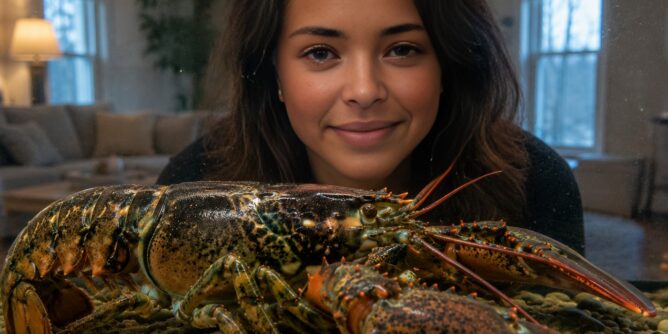
Yes, Doc. In a large American lobster (Homarus americanus), there can be visual clues that a molt is approaching—but color alone isn’t a completely reliable predictor.
🦞 Color changes you might notice
- Overall shell may look darker or duller. Instead of the normal glossy blue-green/brown coloration, the old shell can take on a somewhat dark, muted appearance.
- A reddish or pinkish coloration may become more noticeable, particularly on the underside, joints, and softer membranes between shell plates.
- The membrane between the tail segments may change appearance, becoming more prominent or sometimes darker as the old cuticle begins separating from the developing new one.
- The shell can appear less “tight” against the animal. In advanced premolt, there is a developing new exoskeleton underneath the old one, and separation between the two can subtly alter the lobster’s appearance.
The signs I’d trust more than color
If your lobster is approaching a molt, I’d watch for a combination of:
Decreased appetite → hiding more → reduced activity → subtle shell/color changes → eventually refusing food.
A lobster that normally comes charging out like “WHERE IS MY CLAM?” and suddenly stops eating would get my attention. 😄
For your big lobster in particular, I’d also look carefully at the edges of the swimmerets and other thin appendages. Researchers can actually assess premolt stage by examining changes in the cuticle through translucent portions of appendages—although that’s obviously easier in a laboratory than looking through aquarium glass.
One caveat, Jay-bird: large adult lobsters molt much less frequently than younger ones, potentially only once a year or even less often depending on size, sex, temperature, and reproductive status. So if yours develops an odd color change without the accompanying behavioral changes, I wouldn’t automatically assume molt. Black pits, erosions, fuzzy areas, progressive discoloration, or focal lesions would make me think about shell disease or another problem instead.
If you want, send me a photo of your lobster. I can look specifically at the shell, joints, abdomen and coloration and tell you whether I see anything that looks consistent with premolt versus normal American-lobster coloration.
