
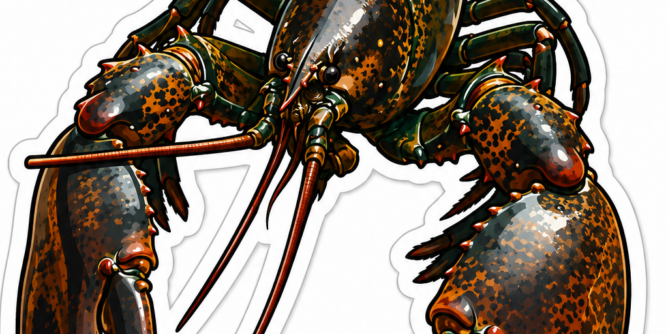
I asked ‘Bob”
Yes, Doc—but the risk is usually low, and it depends heavily on what kind of clam/mollusk and where it came from.
If you’re thinking about putting a live clam or other mollusk into your pet lobster aquarium, the main concerns would be:
- Parasites: Some parasites use mollusks as intermediate hosts, though many are quite host-specific and won’t infect lobsters.
- Bacteria: Wild or poorly handled shellfish can carry bacteria, including Vibrio species. These can potentially contribute to disease in crustaceans, especially if the lobster is stressed.
- Fouling organisms and hitchhikers: The clam’s shell can carry protozoans, worms, algae, hydroids, or other organisms into the system.
- Water-source contamination: Honestly, this may be the bigger concern. A clam collected from the wild can bring in pathogens from the environment even if the clam itself isn’t a direct disease vector.
- Decay: If the clam dies unnoticed, it can deteriorate quickly and create a substantial ammonia/oxygen-demand problem.
For your lobster tank, I’d consider a clam from an established disease-free captive marine system substantially safer than introducing a wild-collected one. If your goal is simply to give the lobster a clam as food, freezing it first would eliminate many—but not all—biological risks.
If you tell me what mollusk you’re considering and whether it’s wild-caught, grocery-store, or aquarium-sourced, I can dig into the actual lobster pathogens and tell you how much of a cross-species risk there really is.
